Bacon Risotto Recipe
There’s something wonderfully comforting about a creamy risotto that warms you from the inside out—and when you add crispy, flavorful bacon to the mix, it’s pure magic. This Bacon Risotto Recipe is one of my go-to dinners when I want something cozy but still impressive enough to serve guests. The bacon adds a smoky depth that pairs perfectly with the richness of the parmesan and the tender Arborio rice.
I love making this recipe on weekend evenings or rainy days when I have a bit of time to stir the rice and enjoy the cooking process. It’s honestly a lot easier than it looks, and the payoff is that irresistible creamy texture with those little bursts of salty bacon in every bite. Once you try this Bacon Risotto Recipe, I have a feeling it’ll become a staple in your dinner rotation too.
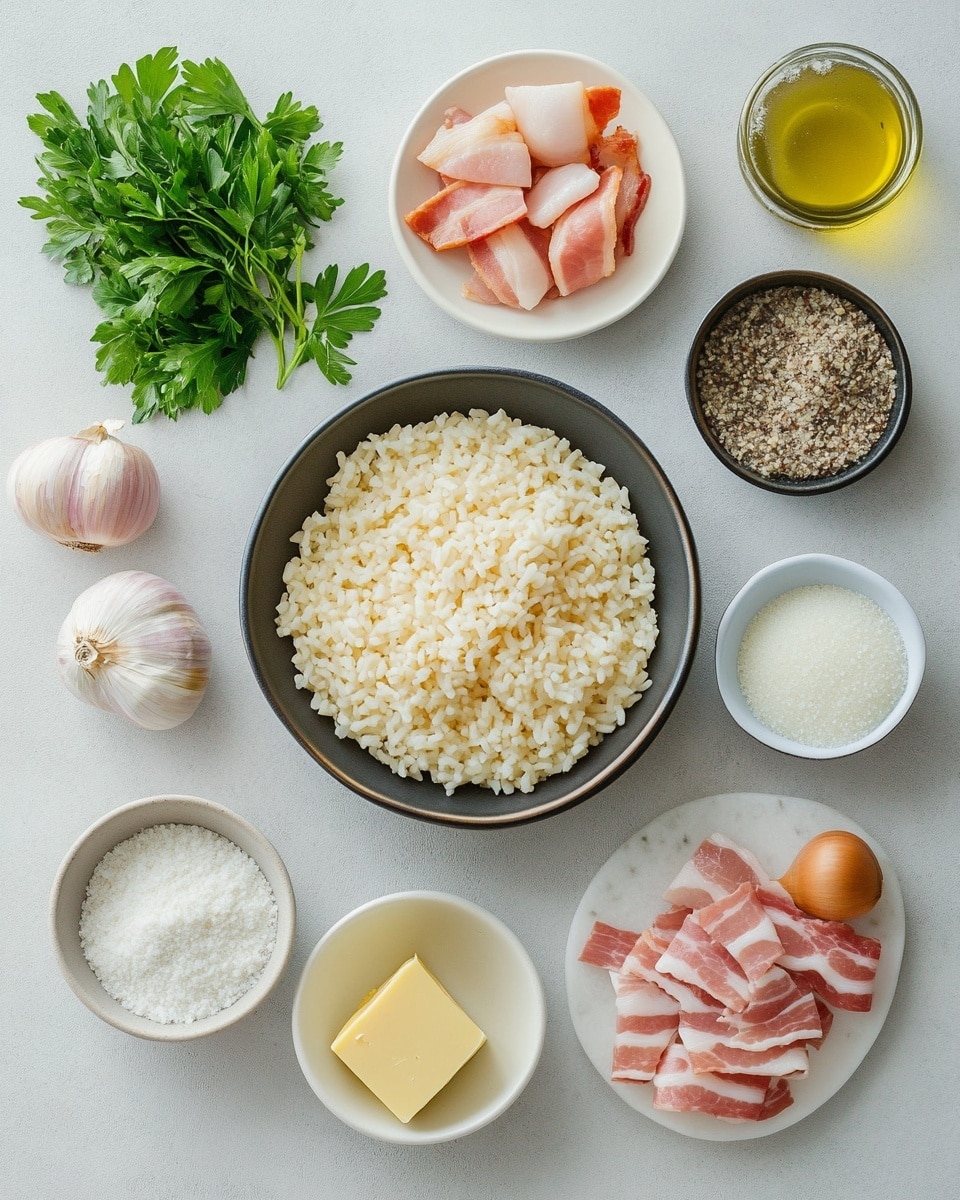
Ingredients You’ll Need
Each ingredient here plays a special role in building layers of flavor and that perfect creamy risotto texture. When shopping, opt for high-quality bacon and fresh parmesan for the best results.
- Arborio rice: This short-grain rice absorbs liquid beautifully and releases starch, making your risotto creamy without any cream.
- Bacon: Choose a good-quality, fatty bacon for maximum flavor and fat to cook the onions in.
- Onion: Finely chopped to melt into the risotto base, providing a sweet, savory foundation.
- Parmesan cheese: Adds a nutty, salty richness that pulls the whole dish together.
- Chicken stock (broth): Use a good-quality, low-sodium stock to control the seasoning level and keep the risotto flavorful.
- Salt: Just a pinch to balance and season everything.
- Black pepper: Freshly ground, for a gentle spicy kick at the end.
- Oil or butter (optional): Only if your bacon doesn’t render enough fat to cook the onion nicely.
- Fresh parsley: Chopped and added at the end for a fresh, herbaceous touch.
Variations
I love that this Bacon Risotto Recipe is so versatile—feel free to play around with it depending on what’s in your fridge or your mood that day. Customizing it gives you a chance to make it your own.
- Vegetable swap: Sometimes I add peas or sautéed mushrooms for more texture and earthiness. They complement the bacon beautifully.
- Cheese variation: Try mixing in a bit of pecorino or gruyère with the parmesan for a different flavor profile.
- Herb twist: Fresh thyme or rosemary can be stirred in for a fragrant lift.
- Dietary adjustment: For a lighter option, use turkey bacon or omit the cheese and butter, then boost seasoning with extra herbs.
How to Make Bacon Risotto Recipe
Step 1: Fry the bacon until crispy
Start by heating your pan over medium heat and add the bacon pieces. Cooking them slowly allows the fat to render out nicely, which you’ll use later to cook the onion. Keep frying until the bacon is golden and crispy—this contrast in texture makes the dish so satisfying. Once done, scoop the bacon out and set it aside on some paper towels to drain excess fat.
Step 2: Cook the onion with the bacon fat
In the same pan, toss in your finely chopped onion and sprinkle with salt. The salt helps draw moisture out, softening the onion beautifully. If you notice your pan is too dry because your bacon was very lean, add a bit of oil or butter now to keep things from sticking and to help the onion turn golden and sweet. Cook gently—don’t rush this step because the flavor depends on it!
Step 3: Toast the rice and start adding stock
Add the Arborio rice to the pan and stir it well, coating every grain in the onion and fat. Toast the rice for about a minute—this step releases a subtle nuttiness and helps the rice start to soften. Then, pour in a ladle of warm chicken stock, stirring continuously. Stirring is key to coaxing out the rice’s starch and preventing it from sticking or burning. Keep adding stock one ladle at a time, stirring gently and waiting for each addition to mostly absorb before the next.
Step 4: Finish with bacon and seasoning
Once all your stock is absorbed and the rice is tender but still a little al dente in the center (this usually takes about 18-20 minutes), return the crispy bacon to the pan. Stir to combine, and then season with freshly ground black pepper. After removing the pan from heat, stir in your grated parmesan and chopped fresh parsley—this is what adds that luscious creaminess and fresh burst. Taste and adjust salt if needed.
How to Serve Bacon Risotto Recipe
Garnishes
I always finish with a sprinkle of extra parmesan and a few more fresh parsley leaves to brighten the plate. Sometimes I add a drizzle of good-quality olive oil or even a pinch of chili flakes if I want a little heat. These simple touches really elevate the dish without taking away from that smoky bacon flavor.
Side Dishes
This risotto stands out on its own, but I love pairing it with a crisp green salad dressed in lemon vinaigrette to cut through the richness. Roasted seasonal vegetables, like asparagus or Brussels sprouts, also make fantastic companions. On special occasions, a light white wine pairs beautifully with the creamy texture and smoky bacon notes.
Creative Ways to Present
For dinner parties, I like serving this Bacon Risotto Recipe in small, shallow bowls garnished with a sprig of parsley and a parmesan crisp on the side. It looks elegant but stays true to that cozy homemade vibe. Another fun idea is to stuff the risotto into roasted bell peppers or mushrooms for a slightly different presentation that’s a guaranteed conversation starter.
Make Ahead and Storage
Storing Leftovers
Leftover risotto stores surprisingly well in an airtight container in the fridge for up to 2 days. Just be sure to cool it quickly before refrigerating, ideally within an hour of cooking, to keep it fresh and safe. I usually portion it into single servings so it’s easy to reheat one portion without thawing the whole batch.
Freezing
I’ve experimented freezing this Bacon Risotto Recipe, and while it’s possible, the texture can change slightly upon thawing—risotto tends to firm up and lose some creaminess. If you do freeze it, cool it completely, pack it tightly in freezer-safe containers, and use within one month for best flavor. When you’re ready, thaw overnight in the fridge before reheating gently.
Reheating
Reheating risotto is best done gently to bring back creaminess. I usually warm it slowly in a pan over low heat, stirring frequently and adding a splash of warm stock or water to loosen it up. Microwaving works too if you add a bit of liquid, but watch it closely to prevent drying out or overheating. That little extra care really helps bring the risotto back to its luscious self.
FAQs
-
Can I use any type of rice for this Bacon Risotto Recipe?
Arborio rice is best for risotto because it’s high in starch, which creates the creamy texture risotto is known for. Using long-grain rice or other types won’t give you the same creaminess and can result in a drier dish.
-
Do I have to stir the risotto constantly?
While you don’t need to stir nonstop, frequent stirring is important to prevent sticking and to release the rice’s starch gradually, which makes your risotto creamy. Just don’t walk away and let it cook unattended.
-
Can I make this Bacon Risotto Recipe vegetarian?
You could skip the bacon and use vegetable stock instead of chicken stock. Adding smoked paprika or a touch of liquid smoke can help mimic bacon’s smoky flavor if you want to keep that depth.
-
Is it necessary to use parmesan cheese?
Parmesan adds essential umami and creaminess, but if you’re dairy-free or don’t have parmesan, you can try nutritional yeast or skip it entirely. Just remember it will slightly change the flavor profile.
-
How do I know when the risotto is done?
The rice should be creamy and tender but still have a tiny bit of firmness in the center (al dente). It usually takes about 18-20 minutes of cooking with gradual stock additions—you can taste to check.
Final Thoughts
This Bacon Risotto Recipe holds a special place in my heart because it’s a delicious balance of simple ingredients that come together to feel indulgent and comforting. I hope you find joy in making it as much as I do—it’s one of those dishes that feels like a warm hug on a plate. Give it a try next time you want to impress yourself (and anyone lucky enough to join your table) with something cozy and satisfying.